Outdoor lighting either elevates a property or quietly undermines it. The difference is rarely about budget. It comes down to planning, fixture selection, placement, power management, and a clear vision for how people use the space after dark. Our team at Ridgeline Outdoor Living designs and builds across Southern California, and we see the same issues repeated in backyards from Encino to Manhattan Beach. When we turn a dim or overlit yard into a layered, comfortable nightscape, the response is always the same: why didn’t we do this sooner?
This article unpacks the ten most common mistakes and how we steer clients around them. Along the way, you will see references to design choices that tie into broader projects, from 15 Paver Patio Designs Los Angeles Homeowners Love to 12 Backyard Fire Pit Ideas for Entertaining Year-Round. Good lighting does not exist in a vacuum. It should align with your hardscape, plant palette, grade changes, and the way your family moves through the property.
Why good lighting matters
Safety and beauty are the obvious answers, but longevity and maintenance carry equal weight. Energy usage, fixture lifespan, and serviceability drive the total cost of ownership. A well designed system feels calm and intentional, while operating at 6 to 10 watts per fixture and running for years with only minor upkeep. Done poorly, it spikes your electric bill, burns out lamps, and draws attention to flaws rather than strengths.
We often pair lighting with hardscape upgrades, especially when clients explore 10 Hardscaping Features That Increase Property Value, Retaining Walls for Hillside Properties: What Homeowners Need to Know, or The Complete Guide to Hillside Landscaping in Los Angeles. Tackle lighting with the same discipline you would apply to structure and drainage, and it pays back immediately in livability.
Mistake 1: Flooding everything with light instead of layering it
The quickest way to make a yard feel flat and commercial is to install a handful of bright floods. This erases depth, overpowers natural texture, and creates glare. A layered approach builds contrast and rhythm. We combine gentle path lighting at ankle and knee height, targeted accent lights for trees or architectural stone, moderate ambient wash for entertaining zones, and a few focused beams for tasks like grilling or stairs.
One Brentwood project started with six harsh floods on the house. The owners could see brightly, but they could not enjoy the garden because it disappeared into a luminous void. We replaced those with three subtle wall washers, eight low-output path lights, and four narrow beams for two olives and a Japanese maple. The same wattage, spread across multiple layers, delivered dimension and comfort.
Mistake 2: Ignoring glare and sight lines
If you can see the bulb, the light is probably wrong. Glare makes people squint, causes headaches, and destroys the mood. The fix is not just lower wattage, but proper shielding, aiming, and fixture height. We also walk the site at night during aiming. It is the only way to find the line of sight from the kitchen sink window, the primary lounge chair, or the neighbor’s second story, then adjust shields or reposition fixtures.
Think of path lights and wall sconces as instruments that need tuning. A 2 to 5 degree tilt can eliminate a hot spot. An extra glare guard on an uplight can preserve the halo on a palm canopy while sparing your dining table. When we develop 10 Outdoor Lighting Ideas for Los Angeles Landscapes, every idea gets tested from where human eyes actually sit.
Mistake 3: Using the wrong color temperature for the architecture and plants
Color temperature sets the emotional tone and can either flatter or fight existing materials. Warm white around 2700K flatters stucco, limestone, and wood. Slightly cooler 3000K can clean up modern concrete and steel without feeling blue. Going cooler than 3000K outdoors usually reads sterile. For plants, warm light brings out the richness in agaves and olives, while a neutral 3000K makes white flowering shrubs and silvery foliage like Santa Barbara daisies pop.
We sometimes mix color temperatures, but with discipline. A two degree shift feels cohesive. A full step jump creates visual noise. On a Pasadena project with dark ipe cladding and a porcelain paver patio, we used 2700K on the house and 3000K downlights in the olive trees to simulate moonlight. The courtyard felt lively but unified.
Here is a fast reference our designers use when making initial selections:
- 2700K for warm architecture, wood decks, stucco, natural stone, and fire features 3000K for modern hardscape, porcelain pavers, concrete, and white or silver plantings 2200K sparingly for intimate nooks or to mimic candlelight near a fire pit Keep a consistent temperature within each distinct zone for cohesion Test at dusk with temporary fixtures before finalizing
Mistake 4: Forgetting how people move at night
The best lighting anticipates feet and hands. Where do guests set a drink, step off a patio, or open the side gate? A property may need less brightness than you think, but it needs light in the right places. We place low, indirect light to mark edges and transitions. Steps get face lighting or carefully aimed riser lights. Narrow passages receive wall grazers to reveal texture and provide guidance without cluttering the path with fixtures.
This is where design meets safety. Homeowners researching 10 Signs Your Yard Needs Better Drainage or How to Solve Common Yard Drainage Problems usually have complicated circulation patterns caused by grade changes or water management. Lighting those transitions is about contrast management, not illumination for its own sake. Thirty lumens, correctly aimed, can be safer than 300 in the wrong place.
Mistake 5: Treating beam spread and wattage as afterthoughts
Two fixtures with the same wattage can produce entirely different effects depending on beam spread, optics, and mounting height. Narrow beams between 10 and 20 degrees create drama on tall columns or specimen trees. Wider beams between 36 and 60 degrees are better for broad hedges or walls. Overuse of wide beams makes a yard feel washed out. Overuse of narrow beams creates spotty polka dots.
We carry a small kit with lens options and beam modifiers to every aiming session. On a hillside project in Sherman Oaks, a 20 degree beam looked perfect on a cypress from ten feet away, but disappeared from the main balcony. We landscaping guides swapped to 15 degree optics and pushed the fixture back by eighteen inches. That simple change anchored the view for guests arriving in the evening.
Mistake 6: Ignoring controls, timers, and zoning
Light without control is a bill you pay in dollars and frustration. Thoughtful zoning lets you turn on the driveway and entry after dusk, then layer on pool or dining zones when needed. We divide systems into at least three zones at the transformer, more if the property is large or has distinct entertaining areas. Pair that with an astronomic timer that tracks sunset, and you eliminate daily adjustments when seasons change.
Smart controls make sense when they are stable and easy to use. A system tied to landscape circuits should not require a phone to simply enjoy the yard. We often use a hybrid approach: hardwired astronomic timers for the base program, then optional app control for scenes like dinner, movie night, or party. It reduces the risk of a single app or hub going offline and leaving the lights dark for a gathering.
Mistake 7: Overlooking power, wire sizing, and voltage drop
This is where many DIY projects fall apart. LED fixtures need the right voltage at the lamp, usually 9 to 15 volts depending on the manufacturer. Long runs or undersized wire create voltage drop, which causes dim, inconsistent output and premature failures. We design transformer placement early, size wire runs appropriately, and test final readings under load at the furthest fixture.
A typical front yard zone with ten to twelve fixtures may run on 12 gauge wire with a home run to the transformer and short branches to clusters. For larger properties, we may install multiple transformers to keep run lengths manageable. Waterproof splices matter just as much as wire size. A corroded connection can drag down a whole zone. Experienced installers treat every connection like a weak link to be protected.
Mistake 8: Placing fixtures where maintenance crews or sprinklers will destroy them
Lights are not set-and-forget. Mowers, leaf blowers, and line trimmers find anything fragile. We tuck path lights back from lawn edges or use sturdy risers where they cannot be buried in growth. Where sprinklers throw hard water, we prefer fixtures with finishes that can be cleaned easily, and we angle heads to shed water. On drip irrigated, drought tolerant landscapes, fixtures typically stay cleaner and longer lasting. That aligns well with The Ultimate Guide to Drought-Tolerant Landscaping in Los Angeles and The Best Drought-Tolerant Plants for Los Angeles Yards.
We also watch for mulch migration. After the first rainy season, a well mulched bed can bury low fixtures by an inch or two. That changes both the look and the airflow that keeps LEDs cool. We plan for annual service to reset heights, re-aim beams, and clear debris.
Mistake 9: Forgetting the neighbors and the night sky
Good lighting respects property lines and the stars. In hillside neighborhoods, an uplight pointed carelessly toward a picture window two lots away earns quick complaints. We use shields, lower outputs, and precise aiming to keep light on target. For moonlighting in trees, we mount higher and aim down with tight beams to avoid uplight spill. In coastal zones with sensitive wildlife, we consult local guidelines and favor warmer color temperatures and lower intensities.
Dark sky awareness is not just about regulation. It is about preserving the character of the night. A backyard designed around 12 Backyard Fire Pit Ideas for Entertaining Year-Round feels better when the surrounding landscape reads as soft silhouettes rather than a glowing dome. We often recommend turning off accent zones by 11 p.m. While keeping paths and entries dimly lit for safety.
Mistake 10: Treating lighting as an add-on rather than part of design-build
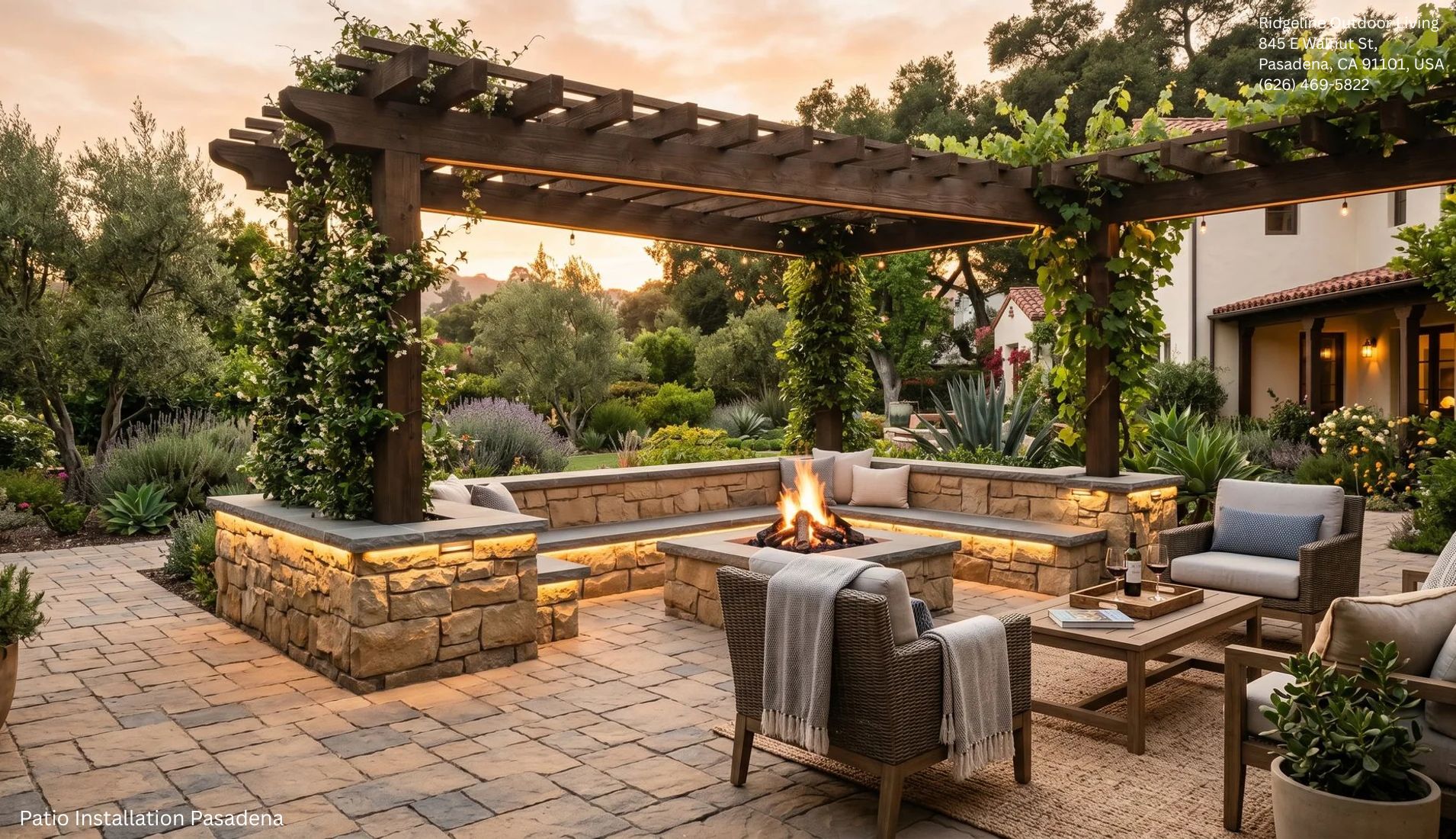
Lighting makes the biggest impact when coordinated with hardscape, planting, and utilities from the outset. We pull conduit under walkways before pavers or concrete goes in. We sleeve under driveways when discussing 15 Driveway Paving Ideas to Improve Curb Appeal. We integrate niche lighting into retaining walls or seat walls so you never see the source, just the glow on the surface. When clients ask How Ridgeline Outdoor Living Designs Stunning Outdoor Spaces, the honest answer is that we plan downstream effects from day one.
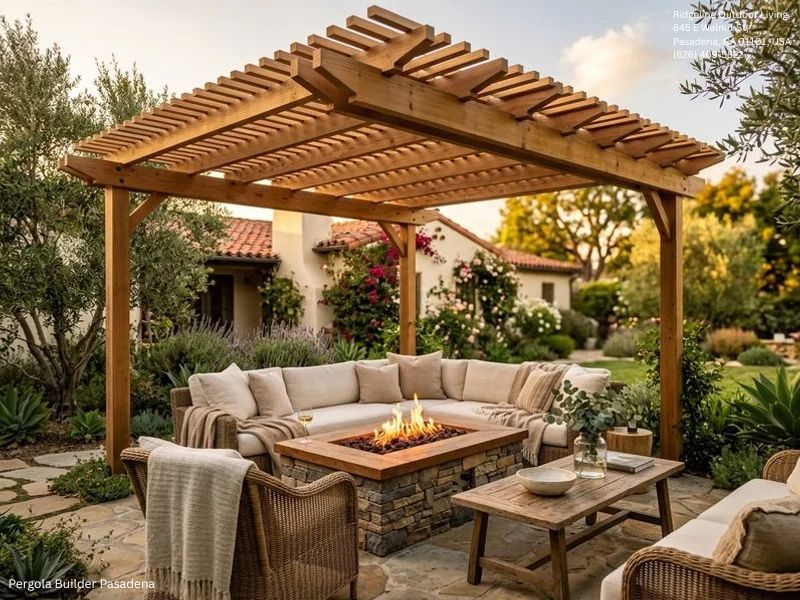
Retrofitting can still succeed. We use minimally invasive trenching or no-dig wire routing and make careful fixture choices that hide well in established beds. Yet early coordination costs less and unlocks creative options, such as downlights in pergola beams or subtle step lighting cast into wall caps. Homeowners weighing Pergolas vs Covered Patios: Which Is Right for Your Home? Should think about lighting as a deciding factor, since beams, rafters, and ceiling finishes determine where we can mount downlights or run hidden wiring.
A short planning checklist for homeowners
Use this simple sequence before any purchase. It keeps you focused on function and reduces change orders during installation.
- Map how you use the yard at night: entry, dining, cooking, lounging, play, and pet routes Photograph key views from inside the home to plan what you want to see after dark Choose a core color temperature per zone, then test with two sample fixtures before committing Define zones and control strategy: timer baseline, manual switches, or scene control Confirm wire paths, transformer locations, and any sleeves needed under hardscape
Case snapshots from Los Angeles properties
A hillside yard in Silver Lake had a breathtaking view but felt treacherous after sunset. Steps were uneven, the handrail was unlit, and the single floodlight washed out the deck. We replaced the flood with three 3000K downlights mounted high in a mature jacaranda, which created a soft pool of light that read like moonlight. We added minimalist rail lights at 2.5 watts each along the stair, and two narrow beams aimed at a pair of columnar cypresses that anchored the descent. The owners reported that guests finally used the stairs comfortably, and the deck took on a glow that made their small gatherings feel special.
In Pacific Palisades, a modern courtyard had porcelain pavers and a low stucco wall but no night presence. Our team recessed linear LEDs beneath the wall cap to graze the vertical plane, which emphasized the courtyard geometry without any visible fixtures. Two compact accents lit a small crepe myrtle and a blue glow agave. The entire scene ran under 50 watts. Compared to installing additional overhead fixtures, this approach preserved quiet elegance and cut glare to zero. It also tied seamlessly into the conversation we had earlier about 15 Paver Patio Designs Los Angeles Homeowners Love, where the rhythm of joints and edges benefits from side lighting rather than top light.
Materials, finishes, and durability that stand up to the coast and the valley
Los Angeles gives us marine layer, salty air, and hot inland summers. Fixture bodies in solid brass or marine grade stainless steel hold up better than powder coated aluminum near the coast. We select gaskets and seals that survive hard water and try to keep lenses slightly angled so water does not pond. Quick connect clips may be convenient, but gel filled crimp connectors with heat shrink give you a decade of reliability. On larger jobs, we specify service loops in the wire at key fixtures. That way, if a plant matures and we need to move a light a few feet, there is slack.
LED quality varies. Lumen output, color rendering index, and driver stability affect how plants and finishes look. We prefer lamps with CRI of 90 or above around dining and seating areas, so skin tones and food look natural. In accent zones where we highlight stone or trees, CRI in the mid 80s can suffice, but the beam quality must be tight and even. We keep spare lamps from the same batch to avoid slight color differences during replacements.
Integrating lighting with other outdoor features
Outdoor kitchens, fire features, and water elements all ask for different lighting approaches. If you are exploring How Much Does an Outdoor Kitchen Cost in Los Angeles? Or Outdoor Kitchen Features That Are Worth the Upgrade, think about task light under-counter, toe-kick glow for safety, and a small adjustable downlight near the grill that does not blind the cook. For fire features, less is more. The flame is the star, so we use minimal background light and, occasionally, 2200K accent to relate to the fire’s warmth.
Water is a mirror at night. Light the surroundings, not the surface, to avoid glare. A single soft beam on a sculptural boulder or the far side of a small cascade often does more than submersible lights. If you do illuminate within the water, warm white between 2700K and 3000K keeps the effect calm, unless you are deliberately designing a vibrant, modern showpiece like those in 12 Water Feature Ideas for Luxury Los Angeles Backyards.
Budget, phasing, and long term ownership
Lighting budgets vary widely. For a compact front yard with ten to fifteen fixtures, expect a professional installation in the $4,000 to $8,000 range depending on fixture quality and control strategy. Larger backyards with multiple zones, high trees for downlighting, and custom integration can reach $15,000 to $40,000. These are broad ranges. Site access, trenching through roots, and sleeving under existing hardscape all move the needle.
Phasing is smart. We often start with entries, paths, and steps, then add accent and ambient layers during a second phase. This matches how many homeowners approach 10 Backyard Upgrades Worth the Investment Great site or 12 Outdoor Living Features That Add the Most Value. A phased plan avoids rework, since conduits and transformer capacity are set from the start.
Maintenance is light but necessary. Expect to:
- Re-aim and clean lenses annually, especially after Santa Ana winds and spring pollen Check timer programs seasonally and after power outages Trim plant growth that blocks beams or creates hotspots on leaves
LED lamps can last 25,000 to 50,000 hours, which for most programs equates to 10 to 15 years. Drivers and connections occasionally fail sooner, so organizing zones and wiring so they are serviceable saves headaches. We label every run at the transformer and keep a drawing of as-built conditions for future reference.
How Ridgeline Outdoor Living approaches design-build lighting
We begin with your goals and how you live outdoors. If you are creating a resort feel, we might borrow ideas from 10 Ways to Create a Resort-Style Backyard at Home and Pool Landscaping Ideas for Los Angeles Homes, then design gentle, continuous edges of light that guide bare feet. If you are elevating curb appeal, the path might echo themes from The Most Popular Driveway Materials in Los Angeles, which often calls for low, glare free lighting along bands or borders.
Our process includes: Site walk at dusk for existing properties. We bring mockup fixtures and test angles before we ever write a proposal. Coordination with hardscape and planting. We sleeve under pavers for later phases, adjust planter depths for fixtures, and confirm plant selections that look good under night lighting. Electrical planning and zoning. We size transformers, split runs to minimize voltage drop, and set controls that match everyday routines. White glove aiming. After installation, we spend a night on site to fine tune, then return a month later for a quick check once plants settle and your eyes adapt.
Business Name: Ridgeline Outdoor Living
Address: 845 E Walnut St, Pasadena, CA 91101, United States
Phone: (626) 469-5822
Ridgeline Outdoor Living
Ridgeline Outdoor Living is a Pasadena-based landscape design-build company serving Greater Los Angeles with custom outdoor living, hardscape, and drought-tolerant landscape solutions. The company specializes in patios, retaining walls, outdoor kitchens, drainage, hillside projects, and turnkey landscape construction, handling projects from design and permitting through final build and warranty.
845 E Walnut St, Pasadena, CA 91101, USA
Business Hours:
- Monday – Saturday: 8:00 AM – 6:00 PM
- Sunday: Closed
Follow Us:
Lighting is part of a system that includes drainage, grading, and structure. When we rework a yard suffering from Common Landscape Drainage Problems and Their Solutions, we add lighting that reveals grade changes without drawing attention to drains or swales. Similarly, for hillside properties, we often incorporate niche lights within retaining walls, tying back to The Complete Guide to Retaining Walls in Los Angeles.
Bringing it all together
The point of outdoor lighting is not brightness. It is clarity, comfort, and character after sunset. Avoid the ten mistakes outlined here and your property will read as intentional and welcoming. Plan zones at the transformer, choose color temperatures that suit materials, protect sight lines, and place fixtures where feet and eyes need them. Treat power and wire sizing as foundational, not an afterthought. Respect neighbors and the sky. Most of all, integrate lighting into the broader design of your outdoor living space.
When a yard glows gently, people linger. A paver patio becomes a living room. A pergola gains a second life after dusk. A simple path invites a stroll. That is the kind of result we aim for when clients invite us to create functional spaces, the same ethos behind How Ridgeline Outdoor Living Creates Functional Outdoor Living Spaces and How Ridgeline Outdoor Living Approaches Design-Build Landscaping. With the right plan and a careful hand, your landscape will look as good at 9 p.m. As it does at noon, and it will keep doing so for years without fuss.